A successful academic facility must be highly flexible and adaptable, to respond to the ever-changing needs of the academic world. To achieve that level of flexibility, a building must consist of a wide verity of learning environments. These environments, when arranged correctly within a facility, will dramatically increase building utilization and help the facility remain functional and successful for decades to come.
A matrix of these necessary spaces is provided bellow:
| # OF PEOPLE | SPACE NAME | STYLE | FLEXIBILITY | LEARNING MODE |
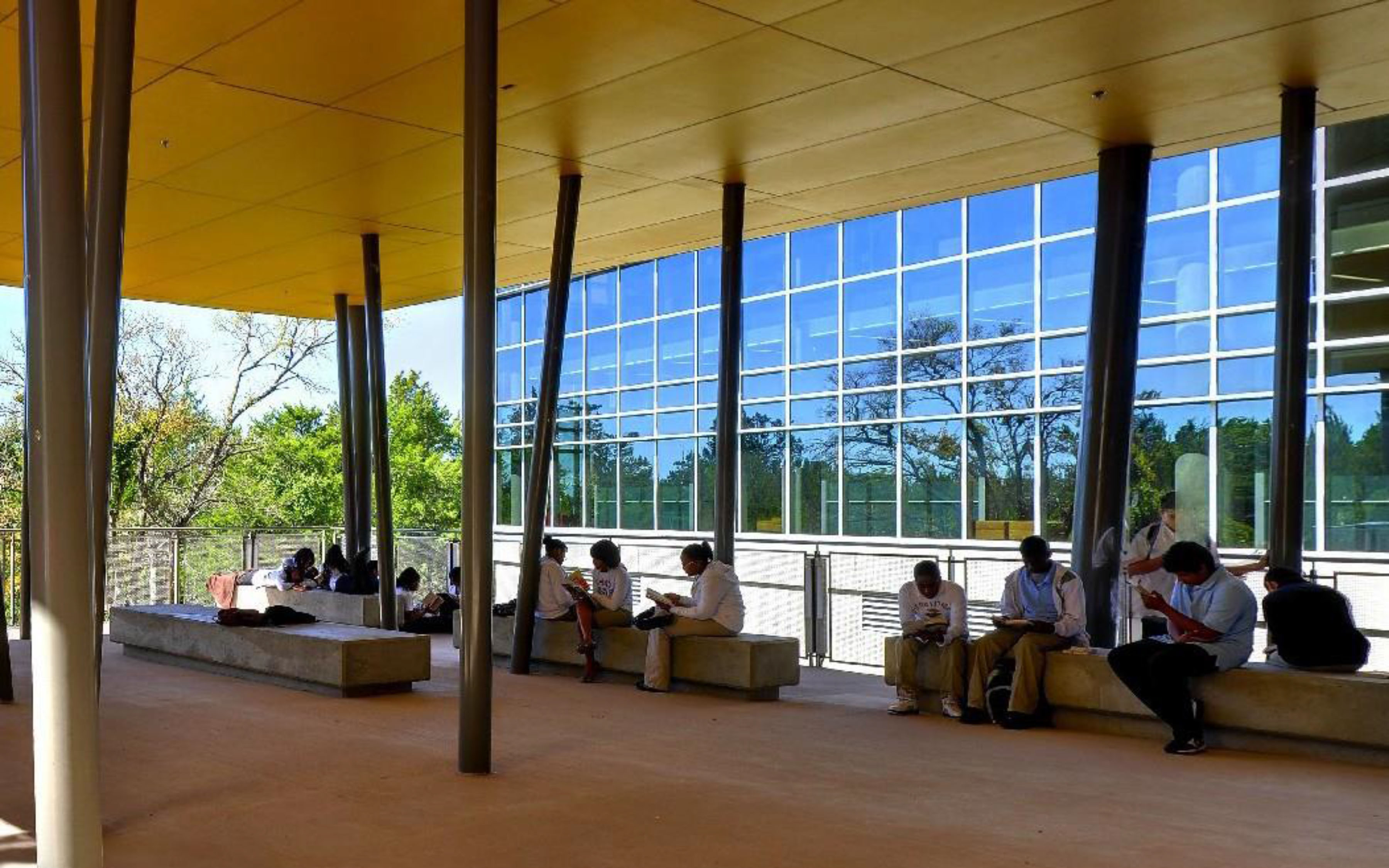
| 1 to 2 | Terrace / patio | Informal | Moderate | Social |
| 2 to 3 | ibar | Formal | Low | support |
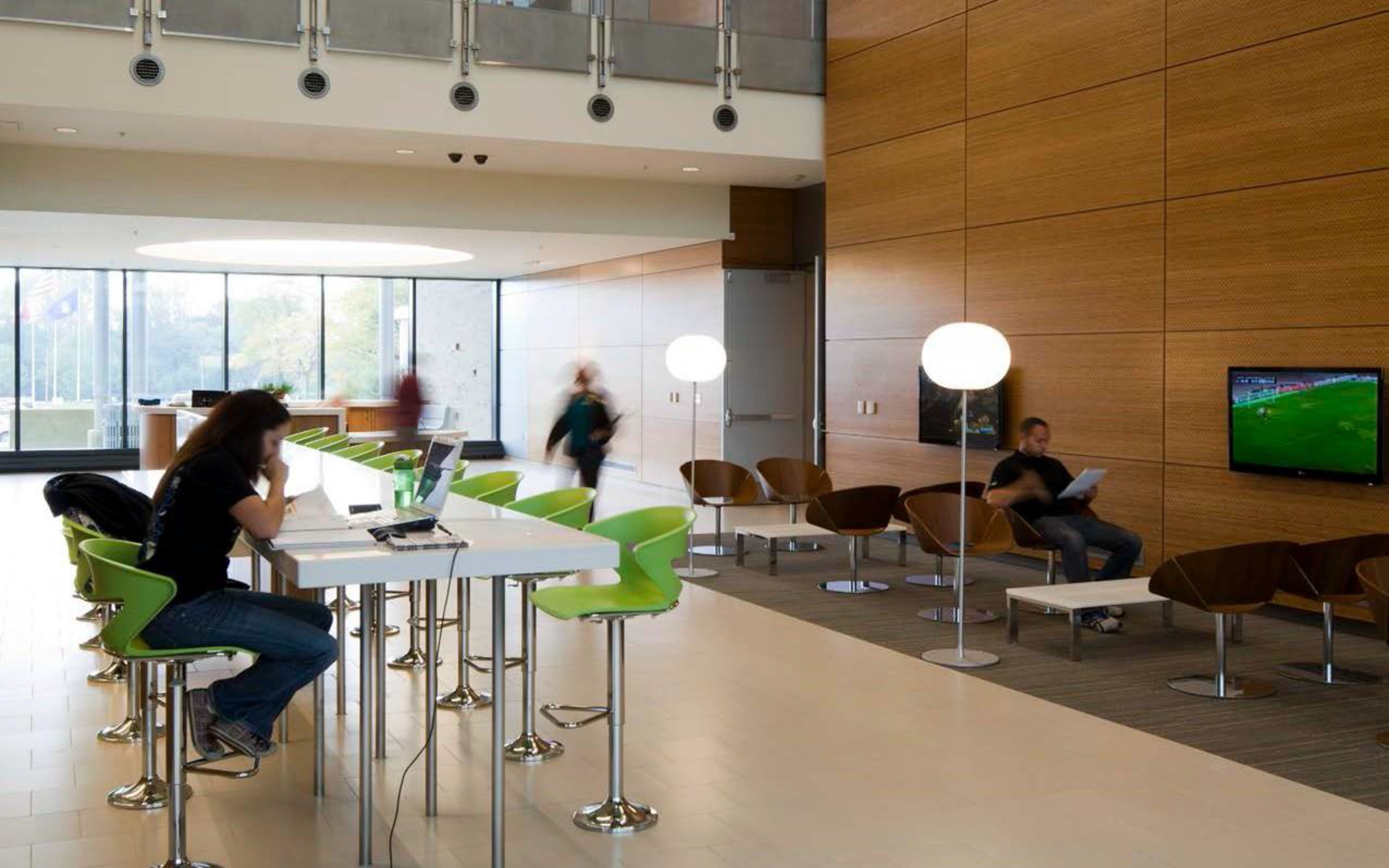
| 2 to 3 | Mediascape | Informal | Low | Peer-to-peer |
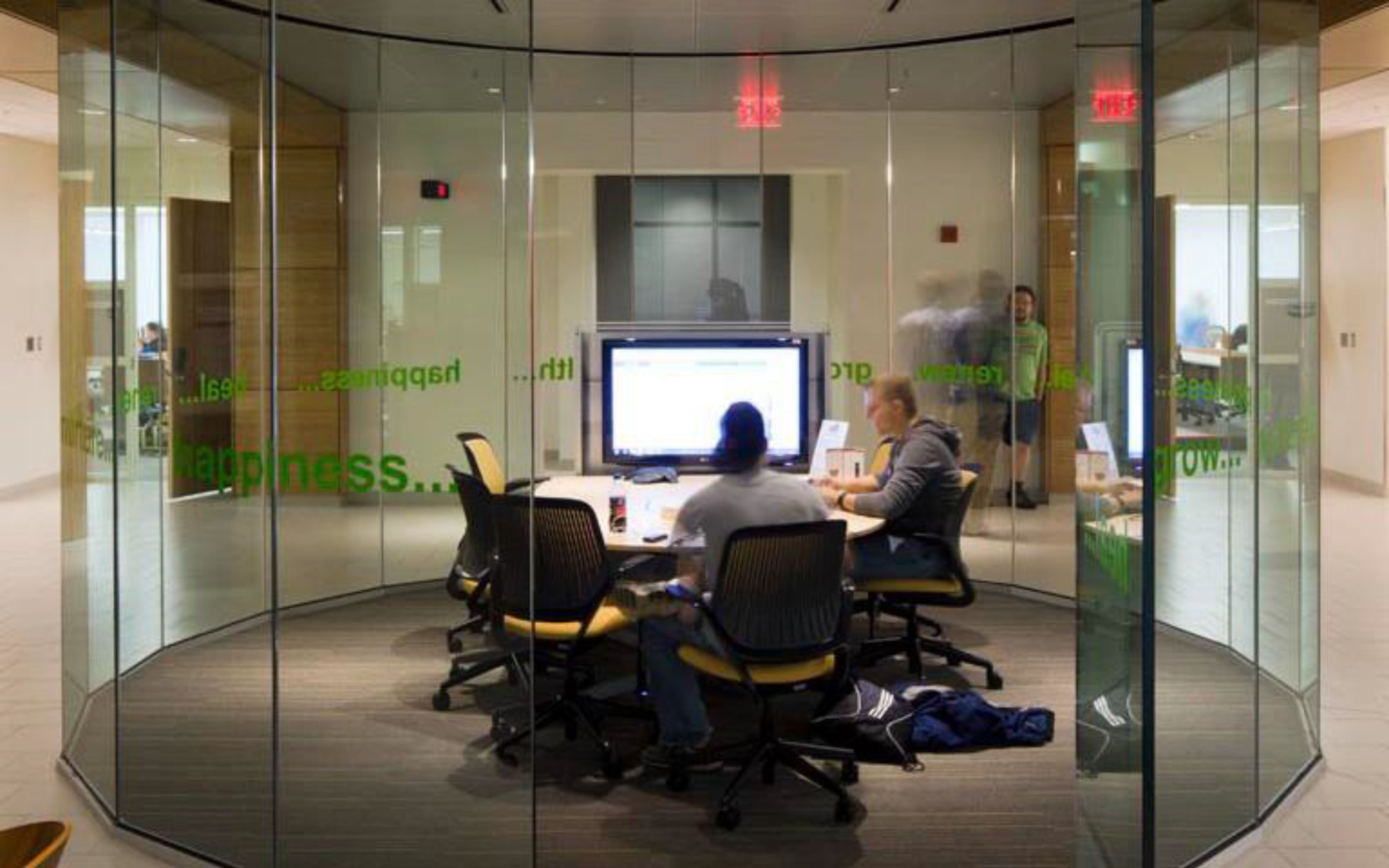
| 3 to 5 | Pod | Formal | Moderate | Collaborative |
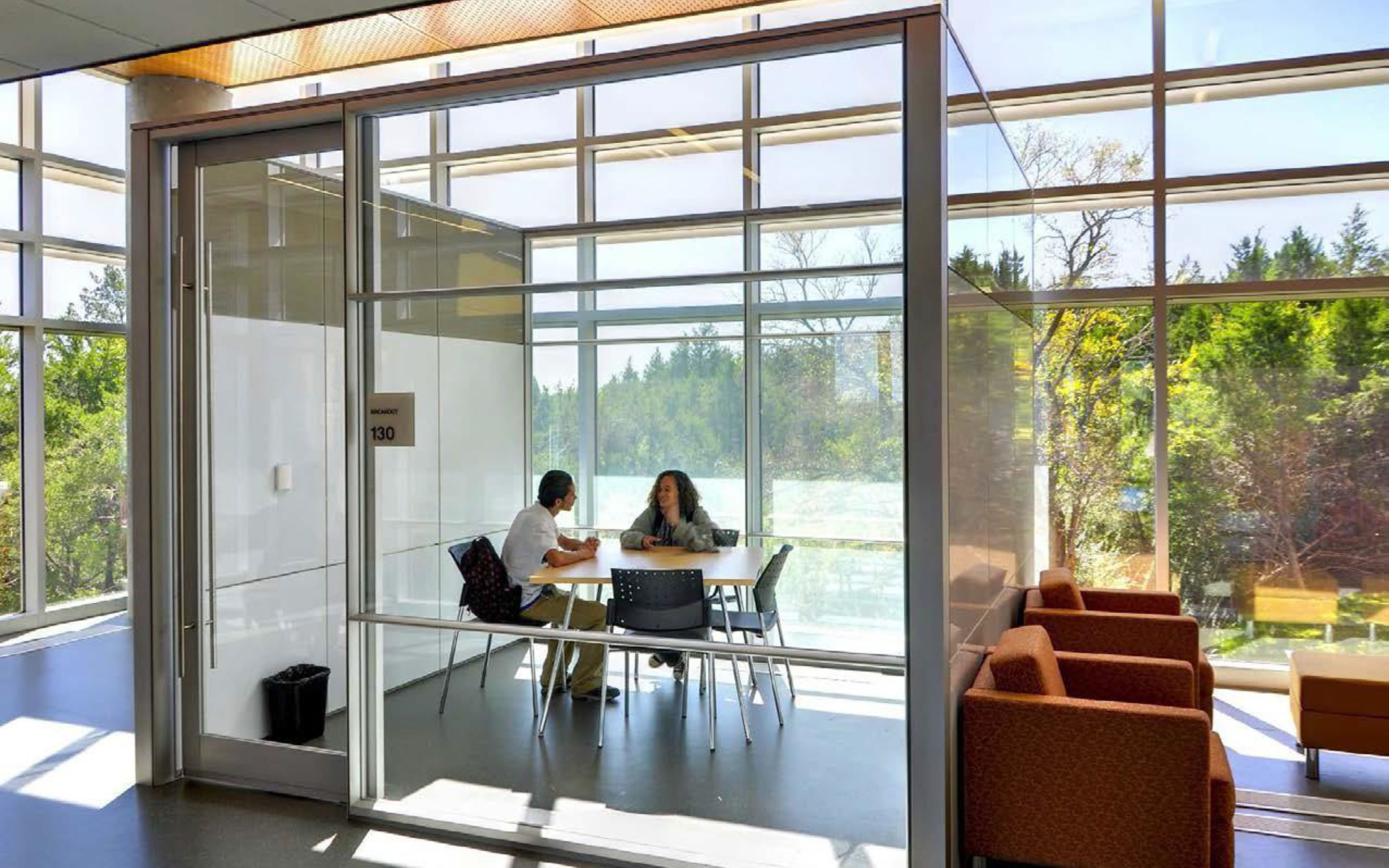
| 3 to 5 | Breakout | Informal | High | Collaborative |
| 8 to 16 | Seminar | Formal | Low | Socratic |
| 8 to 16 | Brainstorm | Informal | High | Collaborative |
| 20 to 40 | Classroom | Formal | Moderate | Socratic |
| 20 to 40 | Flex class | Informal | High | Collaborative |
| 20 to 40 | Low intensity lab | Formal | Moderate | Project-based |
| 20 to 40 | Workshop studio | Informal | High | Project-based |
| 50+ | Lecture hall | Formal | Low | Teacher focused |
| 50+ | Learning theater | Informal | High | Lecture/ high tech |
| 100+ | Auditorium | Formal | Low | Teacher focused |
| 100+ | Commons | Informal | Moderate | Social |
 @maisa_jar