Tuesday, March 17, 2015
Time: 1:00 p.m
Main Building Auditorium
American University of Sharjah
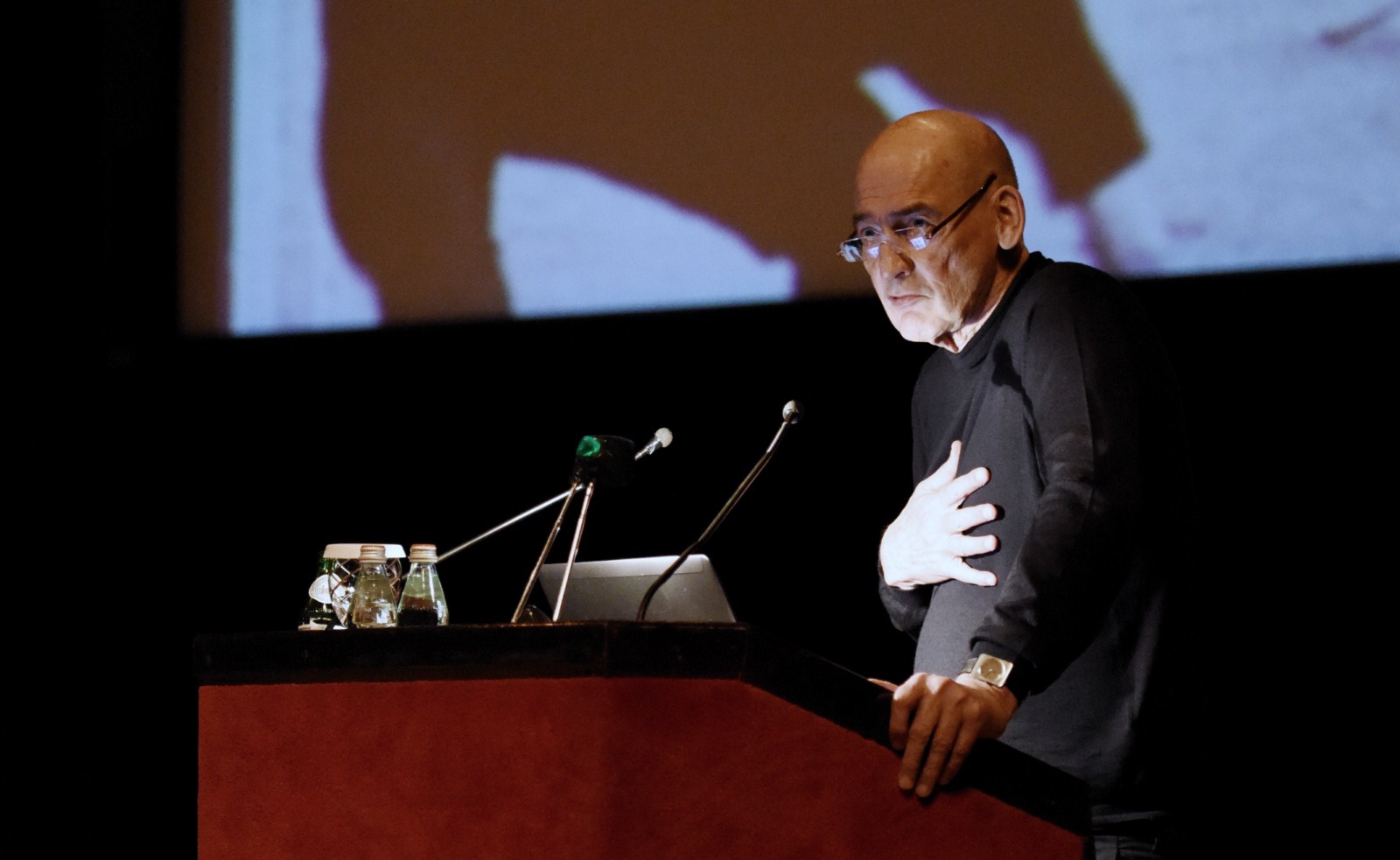
Remment Lucas “Rem” Koolhaas (born 17 November 1944) is a Dutch architect, architectural theorist, urbanist and Professor in Practice of Architecture and Urban Design at the Graduate School of Design at Harvard University. Koolhaas studied at the Architecture Association School of Architecture in London and at Cornell University in Ithaca, New York. Koolhaas is the founding partner of OMA, and of its researchoriented counterpart AMO based in Rotterdam, the Netherlands. In 2005 he co-founded Volume Magazine together with Mark Wigley and Ole Bouman.
INTRODUCTION
- “Every person is a project of his time”
- “We are responsible for the characteristics of Dubai, and we are the first to criticize it”
- “Nowadays, buildings demand more personal expression of private initiative not global”
- GDP Growth 2011: Qatar 18.6%, China 9.6%, India 8.4%, Nigeria 7.4%, Saudi 4.5%, Russia 4.3%, UK 2.0%, Greece -2.6%
- OMA:
- Real, Doing, Act, Building, Change, Manifestation, Reactive
- AMO:
- Virtual, Thinking, Reflect, Not Building, Observe, Manifesto, Roactive
PROJECTS
China Central Television Headquarters (CCTV)
The project main design objective was to emphasize on HOW the building works then WHAT it looks like by considering the following:
- Not repeating another skyscraper
- Creating a diagram of organizations
- A major engineering challenge was to calculate skin stress points, which ended up deliberately reflecting on the building skin.
- The structure is present in the interior space.
- The instability of the Form was a political achievement in Beijing, China. Koolhaas has said the building “could never have been conceived by the Chinese and could never have been built by Europeans. It is a hybrid by definition”.

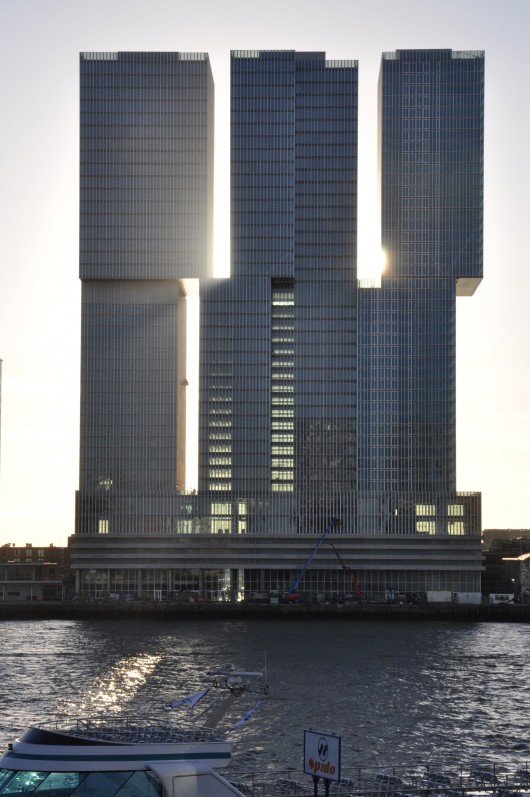
De Rotterdam Building
Total of approx. 80,000 SQ.M – In this project Rem Koolhaas allowed the client’s indecisiveness to impact the Form of the building by considering the following:
- Keeping the form abstract to explore differences to the maximum.
- In the original design the towers did not touch each other, but in order to simplify the play of forces and to keep the construction affordable they are now connected in a few places.
- At about 90m above the ground the towers – knows as West Tower, Mid Tower and East Tower – are shifted a few meters in different directions, which enhances the wind stability and provides space for terraces.
Education City Central Library and Headquarters, Doha, Qatar
“Qatar: Societies that interact but avoid each other” ~Rem Koolhaas.
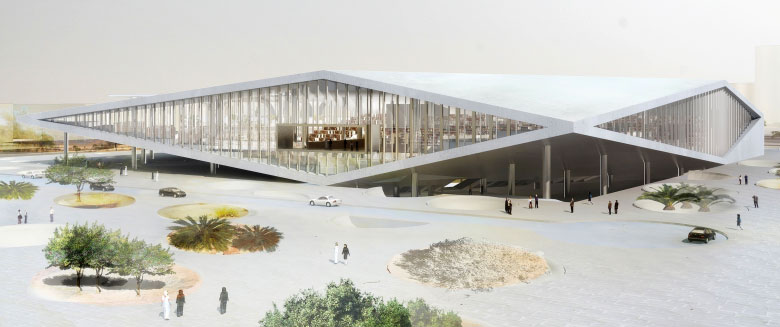
- To realize Qatar foundation’s vision of a library with a million books in its main collection, we conceived a building in which the entire collection would be instantly visible within a single space.
- The library’s form consists of two square plates (138m wide), pulled apart and folded diagonally at the corners to create a shell-like container. The sloped interior surfaces of the plates create three large terraces that are stacked with 300 bookshelves, visible from a central communal space called the urban plaza.
- Each floor was one meter higher, it varies in relation to privacy high achy per floor.
TAIPEI Performing Arts Centre, Taiwan, Taipei
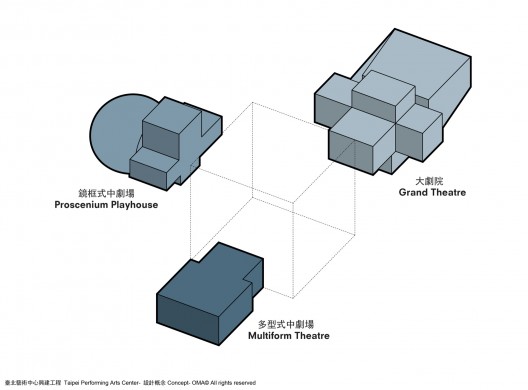
TPAC’s design is comprised of a 1,500-seat Grand Theatre, an 800-seat Multiform Theatre, and an 800-seat Proscenium Playhouse. Plugged into a transparent central cube, each theatre can function independently while sharing backstage space and mechanical facilities. However the Grand Theatre and the Multiform Theatre can also be combined into a Super Theatre with a 100-metre long space for experimental theatrical possibilities. Rem Koolhaas: “This arrangement allows the stages to be coupled for unsuspected scenarios and uses. The design offers the advantages of specificity with the freedoms of the undefined.”
CONCLUSION
“We have to work on new relationships – no cities can grow organically and no buildings now can blend seemingly with the environment” ~Rem Koolhaas
Changing institution from the inside, can architects achieve that transformation?
- Political awareness must be considered by every architect.
- Operating in a mature way in the world as it is at the moment.
 @maisa_jar