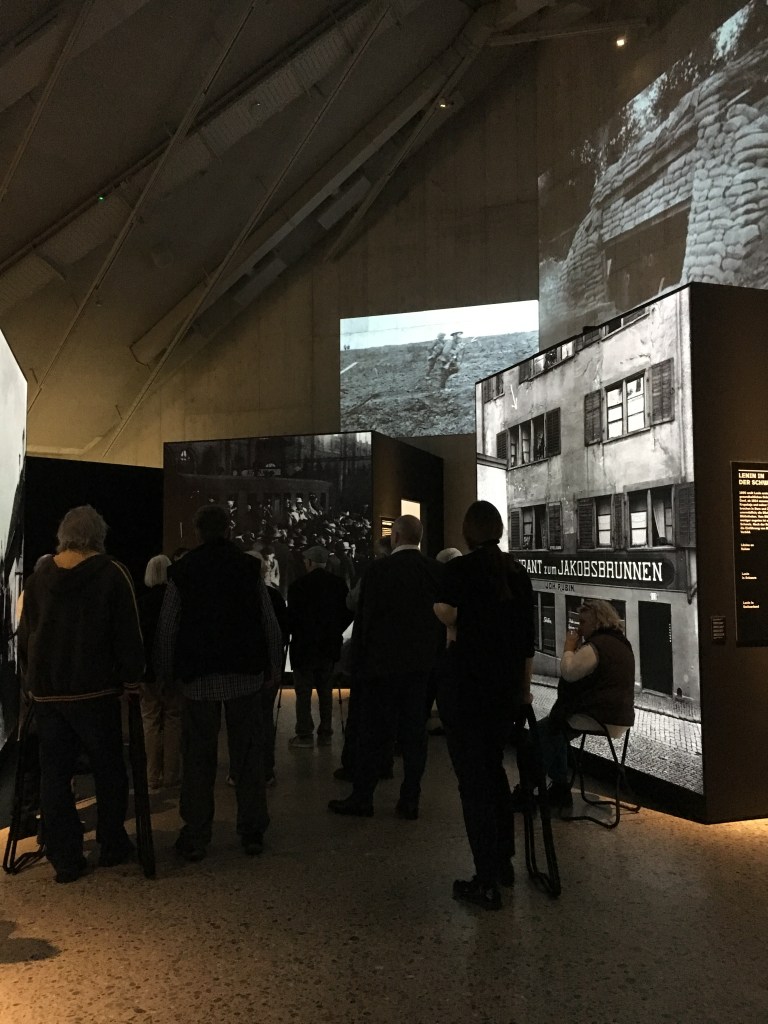
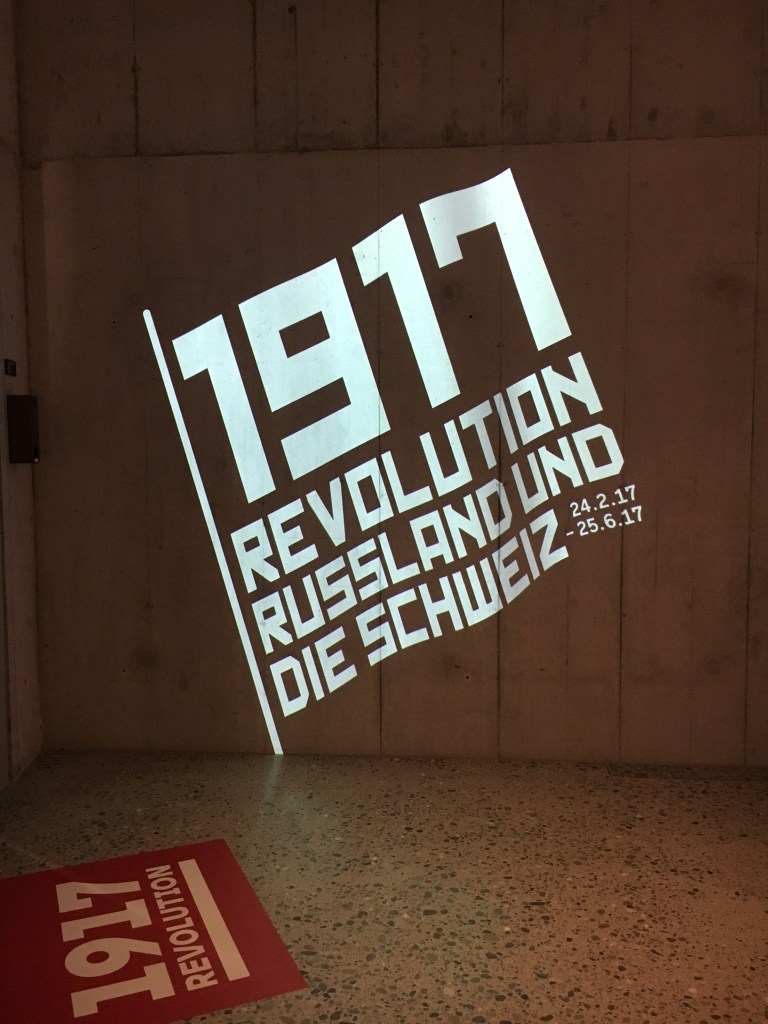
Switzerland most frequently visited museum of cultural history represents the history from its origins to the present day. It is located in the heart of Zurich by the Main Railway Station, and it houses the largest collection of cultural-historical objects in the country. It also addresses socially relevant topics using special exhibitions, for example when I visited on first week of April 2017 they had a special exhibition on 1917 Revolution Russia and Switzerland.
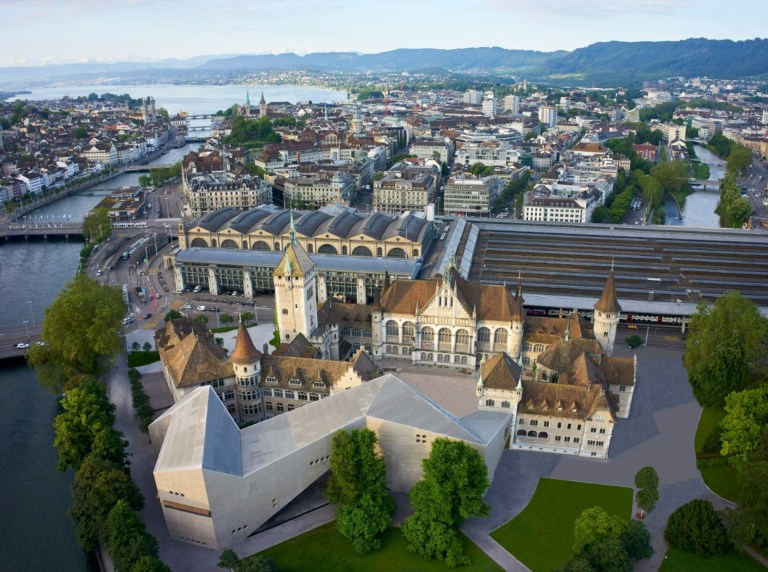
From the architect. The expansion to the National Museum Zurich, for which the opening celebration will take place in July 2016, complements the original museum building of 1898 design by the architect Gustav Gull. The new wing is located on the side adjoining the Platzspitz Park. The old and new buildings are directly coupled to each other so as to form an architectural urban ensemble.
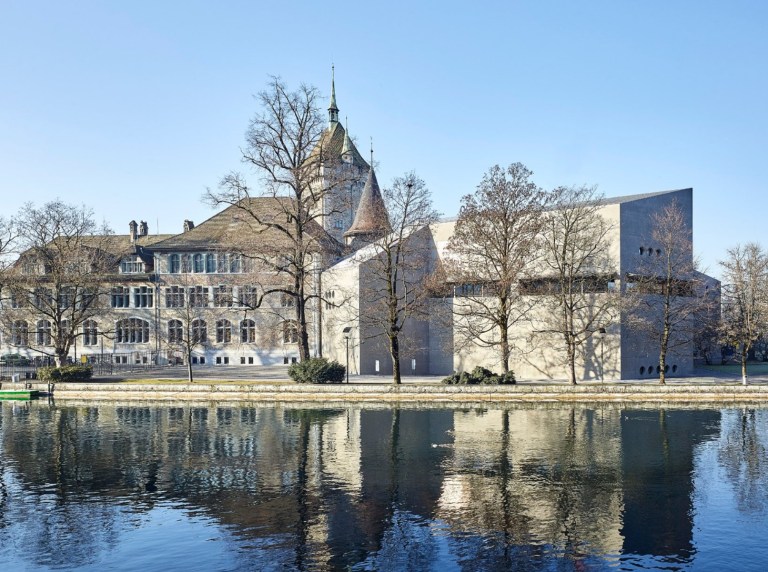
Architecturally the ensemble consists of two very different aspects: the graceful historical old building designed in an open U shape and the sculptural character of the new wing that closes off the existing building complex thereby enabling continuous movement through both old and new sections. The new wing includes a library and a spacious auditorium for public events.
The expressive folds in the rooftops can be understood as a contemporary interpretation of Gull’s articulated Historicism. The new is thus inconceivable without the old, but is nonetheless unmistakably modern.
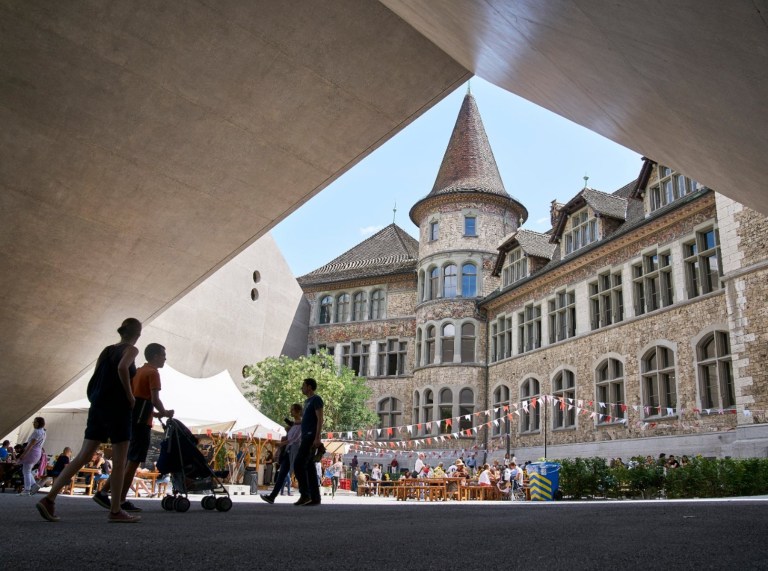
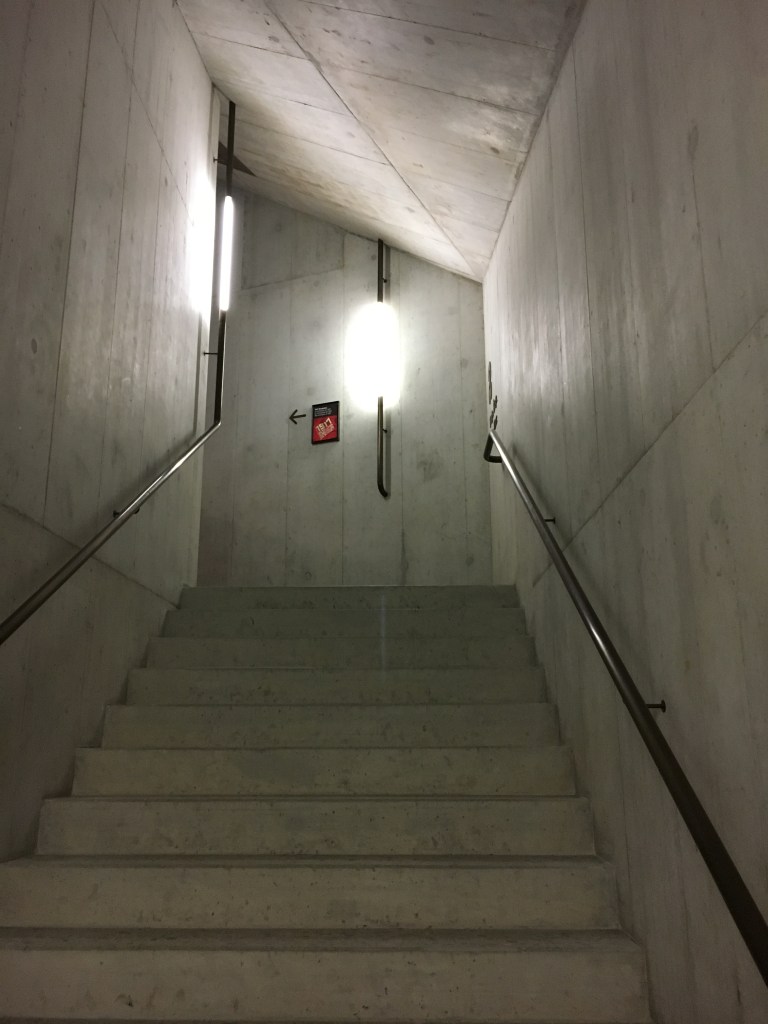
The central motif of the new building is the bridge. it spans across a wide space featuring a water basin (landscaping will be completed in May 2017) that connects the new inner courtyard with the park. The prominent bridge carries over into the interior in the form of a monumental set of stairs leading to the largest exhibition area and as a tribune in the auditorium.
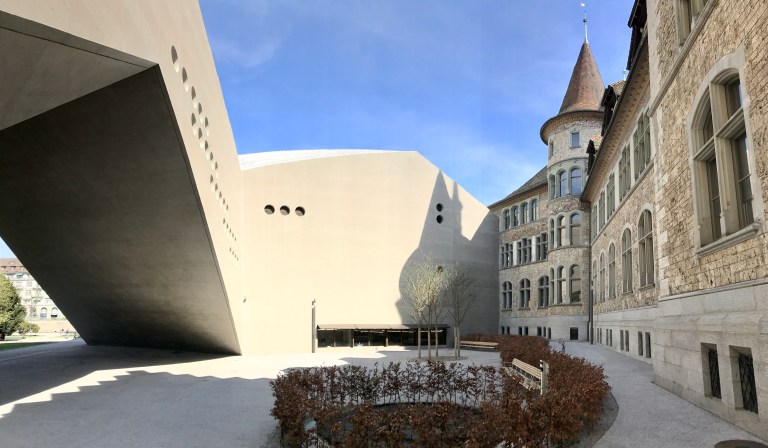
Architecturally the construction phase for the new wing also included conversion measures (earthquake and fire safety) and extensive refurbishing of a large section of the old building according to the national heritage criteria.
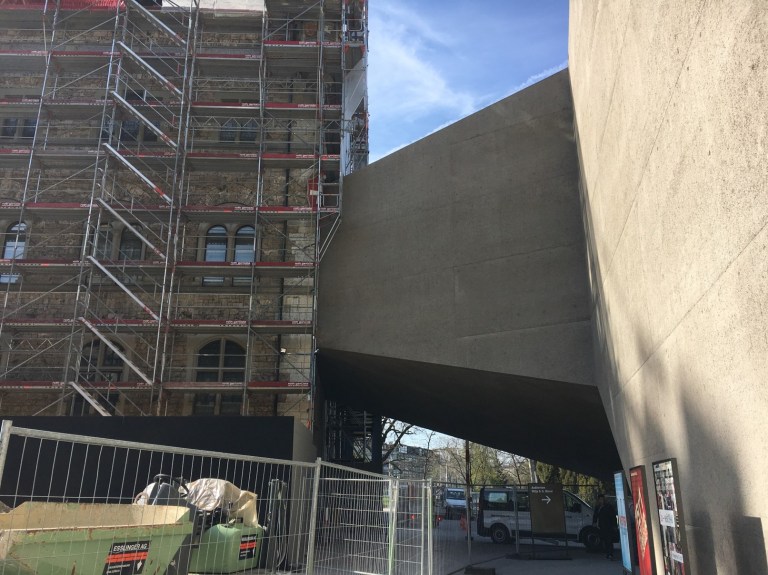
Concrete dominated in the interior of the new museum. Combined with the technical elements purposely left exposed on the ceiling. this creates an almost industrial like atmosphere that is robust, specious and open to a variety of exhibition and presentation.
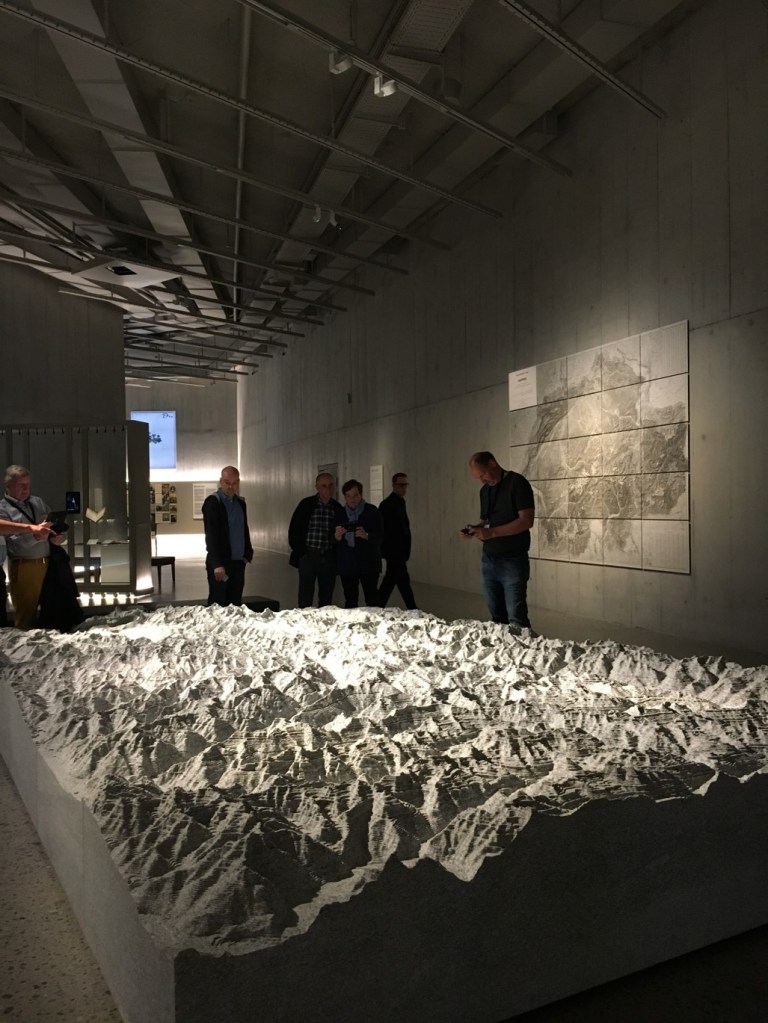
Temporary exhibitions can regularly be seen at the Swiss National Museum, The pick up on historical, cultural or socially relevant topics and are supplemented with debates, lectures, reading or workshops.
 @maisa_jar